
In my last post, I cleared up a common misunderstanding about Lughnasadh. After consulting multiple reliable sources, I’ve come to the conclusion that, according to early Irish tradition, it was Lugh who created the festival to honor his foster mother, Tailtiu. She was a descended from the Fir Bolg—the mythical early invaders of Ireland—who were later conquered by the Tuatha de Danann. Lugh himself was a descendant of the latter.
One of the best descriptions of the early festival comes from Lucas Russo in Uncovering Celtic Mythology, “Lughnasadh marks the beginning of the harvest season. The day was celebrated through sport and craft. It was also a time of love; many people would be joined n engagement and handfasting ceremonies, where lovers would be united in marriage or prepare for a year and a day engaged. Observers feasted and celebrated, some making it a day of travel and spiritual pilgrimages.”
Llewellyn’s Sabbat Essentials: Lughnasadh offers more interesting details: “In The Festival of Lughnasa, Mary MacNeill’s comprehensive study of traditional Celtic Lughnasadh customs, the author concluded that the festival most likely originally consisted of a mix of ceremony, feasting, and ritual theatrics, usually held on hilltops or waterside. There was likely, according to the author, a ritual in which the first fruit from the grain harvest would be brought to the top of a hill and buried as an offering.”
Other elements associated with Lughnasadh include:
- A bull sacrifice and a ceremony involving the animal’s hide (with the meat eaten later at the feast)
- A ritual play retelling Lugh’s triumph over bight or famine
- Climbing hilltops to pray and gather bilberries
- Horse racing and even horse swimming
- Games of hurling
- Assembling at lakes or holy wells
Naturally, the exact content of the festival likely varied from one community to another, depending on local resources and traditions.
As Christianity spread throughout Ireland, Lughnasadh celebrations were altered but not erased. James MacKillop, in A Dictionary of Celtic Mythology, explains: “The Christian Church did not oppose the continuation of the festival marking the beginning of the harvest and the weaning of calves and lambs, but the different names applied to it obscured its Pagan origin. Eventually it broke away from its fixed time of August 1, and might include many days, especially Sundays, from July 15 to August 15.”
In a recent podcast, Jon O’Sullivan from the Irish Pagan School noted: “The first Lughnasadh games may have been held as far back as 1600 BCE. But we know that there are records of Lughnasadh games being held between the 6th and 9th century in Ireland…It fell out of use post-Norman invasion which is in the 11th to 13th century.”
The games were briefly revived in the 19th century, but political disputes weakened support, and their popularity faded once again.
Fast forward to 2025, and we find ourselves with a rich heritage to draw from as we reimagine what Lughnasadh looks like for a modern Pagan audience. There are countless resources online, but here are a few simple ways to celebrate:
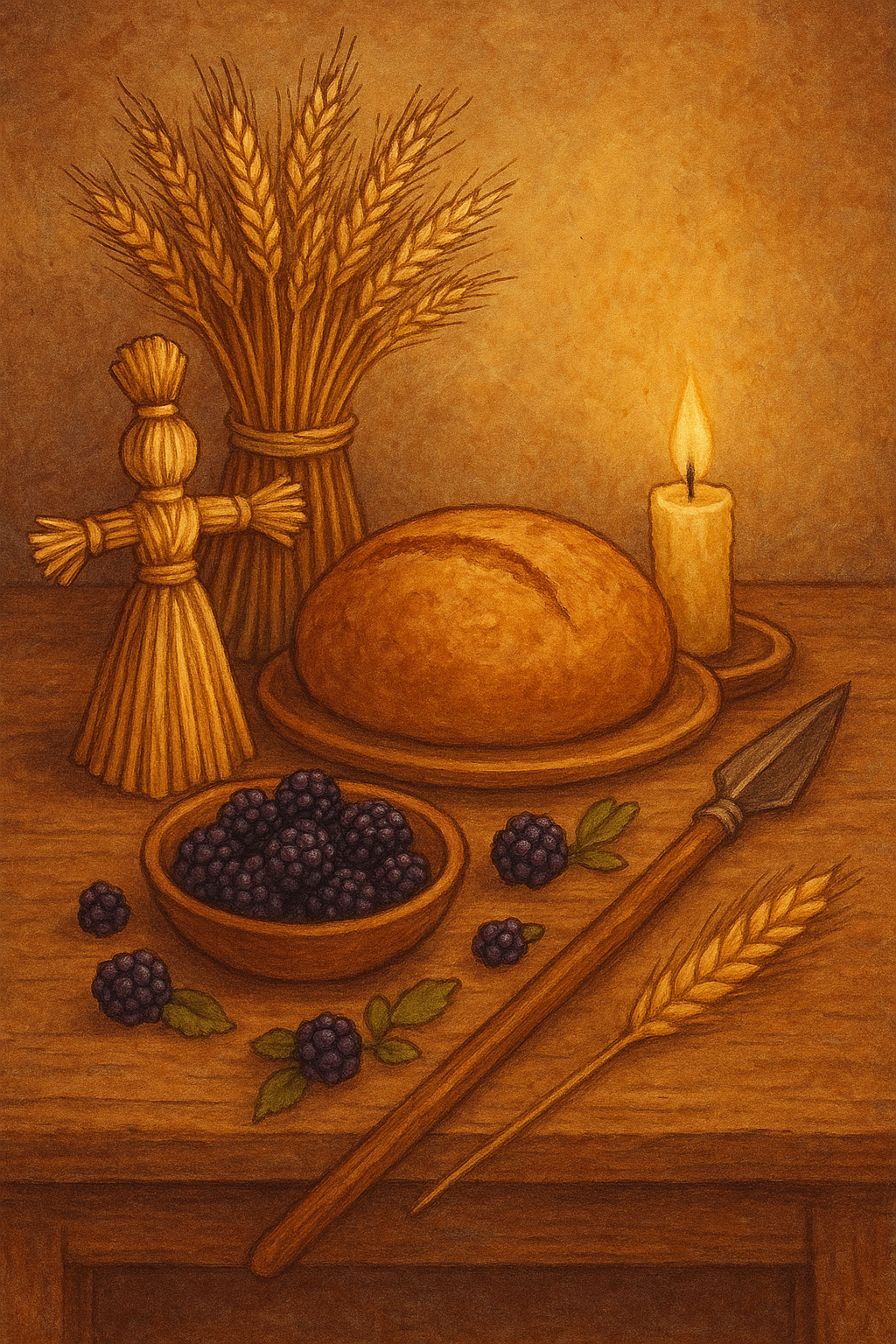
- Bake fresh bread from scratch and serve it with a hearty dinner.
- Craft a wheat straw or corn husk doll for your home altar.
- Invite your friends over for a night of board games.
- If you can’t find bilberries where you live, try making a blackberry cobbler.
- Spend time reflecting on what you would like to “harvest” in this season of your life.
- Since it’s the grain harvest, beer or ale makes a fitting celebratory drink.
Lughnasadh reminds us that every harvest is both a communal and a personal act. The ancient games and rituals may look different from the ways we celebrate today, but the heart of the festival remains the same: gathering together, honoring the fruits of our labor, and giving thanks for the abundance that sustains us.
Whether you celebrate with food, craft, games, or quiet reflection, Lughnasadh invites us all to pause and notice the gifts in our lives. May this season inspire you to share generously, live gratefully, and step into the next turn of the year with joy and intention.
Blessings, David Taliesin, http://www.sabbatandsabbaths.com

 Sabbats and Sabbaths