Persephone Myth Revisited

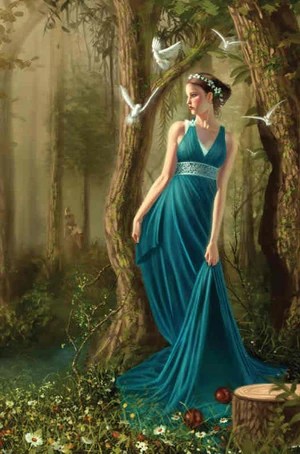
The story of Persephone is a familiar one in Pagan circles, yet it has never really appealed to me because of the violence toward women associated with it. The basic story, as I understand it is that Persephone, the daughter of Zeus and Demeter, was abducted by Hades — her uncle —who took her to the underworld to be his wife. While in the underworld, she became associated with the dead, and her return to the surface and to her mother represents spring and the renewal of vegetation.

While doing research for a book I’m writing, I came across a kinder version of the myth in Sandra Kynes’ A Year of Ritual: Sabbats and Esbats for Solitaries and Covens. Here’s what she wrote:

“One of the most well-known stories of the Maiden Goddess is that of Demeter and her daughter Persephone. Persephone felt that it was her calling to go to the underworld to comfort and guide the spirits of the dead to their rest. Even though Demeter knew her daughter would return, she put her life on hold and waited. During this time, grain and other plants did not grow and the weather was cold. When Persephone returned bringing warmth and love for her mother, the entire earth came alive again. Later (ancient Greek) versions of the story added violence with Persephone being kidnapped to the underworld by Hades and Zeus bargaining with Demeter to bring her back to life. Happily, the gentler version is gaining popularity.”

I appreciate Kynes’ version of the story because it places Persephone in a position of power, where she is making all the decisions. She feels called to go to the underworld instead of being abducted. She also chooses to return to the earth’s surface to be reunited with her mother and to help the world come alive again as it moves from winter to spring.

I know there have been some modern attempts to retell this story in a more positive light. Do any of my readers have favorite resources or reinterpretations of the Persephone myth that do this well? Or do you understand the story in a different way than I’ve presented here? Inquiring minds want to know know!

David Taliesin, ©2025, http://www.sabbatsandsabbaths.com

Posted in Goddess, Ostara | Tagged , , , , | Leave a comment

A Gothic Witch’s Oracle: Deck Review

In the introduction to his guidebook accompanying A Gothic Witch’s Oracle, Raven Digitalis writes, “I think it’s safe to say that Witches have long been portrayed a little bit Gothy, and Goths are traditionally known to look a bit, well, mystical and Witchy! Yet the majority of members in either group do not identify with the other. Gothic culture is based in art, music, and emotion. Witch’s lifestyle is centered on spirituality, mysticism, and the cycles of nature. For many members of each camp, however, a noticeable overlap can’t be brushed aside. That’s where this deck comes into play.”

If this is his intention in creating the deck, I’d say he succeeded admirably. While it doesn’t completely align with my own spiritual path, I’m certain it will find its audience. A Gothic Witch’s Oracle is clearly a labor of love. Each of the 40 cards represents an aspect of self-care or spiritual and magical growth, with evocative titles such as “Shattering the Mental Prison” and “Nurturing the Inner Child.”

When I first held the cards, they felt slightly wider than what I typically work with. However, I quickly realized this was an intentional design choice—to let John Santerineross’ artwork take center stage. The images are strong and evocative. The deck also embraces body positivity, intentionally “freeing the nipple,” as Raven puts it, to destigmatize the female form. He also chose to work with “a variety of models, incorporating ethnic diversity, various body types, multiple ages, and an array of gender/sexual expressions.” Nicely done!

The accompanying guidebook is equally well crafted. It expands on the meaning of each card and includes suggested activities to explore the themes more deeply. The book is beautifully printed on heavy stock paper that feels durable and made to last through regular use.

I’m grateful that Raven reached out to me to review this oracle deck. In the right hands, A Gothic Witch’s Oracle has the potential to be a meaningful tool for deepening one’s spiritual practice.

David Taliesin, © 2025, http://www.sabbatsandsabbaths,com

Posted in Magic, Spirituality | Tagged , , , | 1 Comment

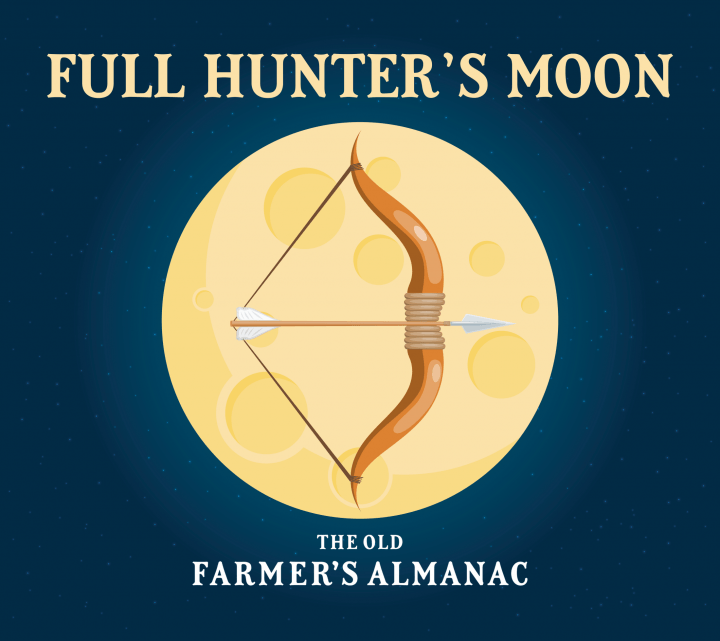
Full Hunter’s Moon: October 6th

full_hunters_moon-resized

According to the Farmer’s Almanac, the Algonquin Native American tribes referred to October’s full moon as the Hunter’s Moon because it was time to go hunting in preparation for winter. As the days grow visibly shorter, perhaps we can use this full moon to contemplate what resources we need in order to make it through the approaching winter season.

We can think of this preparation as either literal or metaphorical. Some of us have Seasonal Affective Disorder (SAD) and have to surround ourselves with the people and coping skills we need in order to keep us healthy. Others are feeling like they’re slipping into a winter season of their lives. If this is the case, be intentional about doing what you need to do in order to keep yourself strong and grounded.

Since, the veil between the worlds is also thin this time of year, it’s the perfect night to seek the wisdom of our Ancestors and Beloved Dead who can help us to navigate the perilous journey ahead. Candles, mugwort, marigolds/calendula, pictures, etc. can help us draw closer to those on the other side. We all need to feel their love and encouragement in this stressful and angry world.

So, put the energy of this season and this powerful moon to good use. It truly is the most wonderful time of the year!

Copyright ©2025 by David Taliesin, http://www.sabbatsandsabbaths.com

Posted in Esbats, Samhain | Tagged , , | Leave a comment

Hurricane Helene Grief Ritual

At Yesterday’s Welcoming and Rainbow Circles we talked about processing grief as we approach the first anniversary of Hurricane Helene. Here is the closing ritual we did:

GRIEF RITUAL

ANOINTING FOR GRIEF [David Taliesin)
Asheville Raven & Crone’s Grief Oil

May you find comfort and strength
As we remember the devastation
Caused by Hurricane Helene.

CASTING THE CIRCLE—David Taliesin
Use a chevron amethyst or quartz crystal

The Light of the Divine surrounds us
The Love of the Divine enfolds us
The Power of the Divine protects us
The Presence of the Divine watches over us
Wherever we are, the Divine is. All is well.

CALLING THE QUARTERS—David Taliesin

Guardians and Ancestors of the East, Spirits of Air, we remember how your fierce winds blew during the hurricane, stirring fear in our hearts. May your winds today be a gentle breeze, clearing away any lingering fear we still hold within. Hail and welcome!

Guardians and Ancestors of the South, Spirits of Fire, we remember the piles of debris burning after the hurricane, reducing to ash what once were living trees and plants. May your flames now be a purifying fire within our bodies, releasing the trauma we still carry from Hurricane Helene. Hail and welcome!

Guardians and Ancestors of the West, Spirits of Water, we have never experienced your fury quite as much as we did on September 27, 2024. Lives and homes were lost; businesses were swept away in the raging flood. Our landscape was forever changed. May your waters now flow more softly, washing away survivor’s guilt, grief, and loss. Hail and welcome!

Guardians and Ancestors of the North, Spirits of Earth, we lost 40% of our trees in Buncombe County during the storm and its aftermath. Yet, we know that nature is resilient, and we have seen signs of healing that began this spring and continue today. Hail and welcome!

Divine Presence who is known to us by many names, we ask for your strength as we approach the first anniversary of Hurricane Helene. Continue to mend that witch is broken in us and in our community as we heal and recover from the storm. Hail and welcome!

GRIEF RITUAL

Make sure everyone has a pen and some dissolving paper. Ask participants to write whatever they wish to let go of as we approach the anniversary of Hurricane Helene. When everyone is ready, ask them to go up to the bowl, one by one, and watch what they wrote dissolve in the water. Remind them that water can be both cleansing and destructive.

CLOSING THE CIRCLE

Guardians and Spirits of the North, we thank you for your presence in our circle today. As we move forward, may we do all we can to restore our land and our community. Stay if you will, go if you must. We bid you farewell.

Guardians and Spirits of the West, we thank you for your presence in our circle today. As we move forward, may we continue to heal from the trauma of the hurricane. Help us also to be a source of healing for others. Stay if you will, go if you must. We bid you farewell.

Guardians and Spirits of the South, we thank you for your presence in our circle today. As we move forward, may we remember the lessons the hurricane taught us—lessons that have shifted our priorities and given us a new perspective. Stay if you will, go if you must. We bid you farewell.

Guardians and Spirits of the East, we thank you for your presence in our circle today. As we move forward, may our lights shine brightly. Help us to be beacons of hope and resilience. Stay if you will, go if you must. We bid you farewell.

Divine Presence, who journeys with us through storm and stillness, through loss and rebirth, we thank you for your presence in our circle today. Guide us as we continue the work of healing our community. We bid you farewell.

The circle is open but never unbroken
Because it is a circle woven in love.
Whatever energy is left in this space
We return to the earth with a spirit of gratitude.
Merry meet, merry part, and merry meet again.

Copyright ©2025 by David Taliesin, http://www.sabbatsandsabbaths.com

Posted in Spirituality | Tagged , , , | Leave a comment

The Norns Still Weave: Discovering the Teutonic Sense of Time

I’ve been reading Kveldulf Gundarsson’s Teutonic Magic: A Guide to Germanic Divination, Lore, and Magic, and came across an intriguing passage about the Old Teutonic concept of time:

“Perhaps the most notable difference between modern thought-patterns and those of the ancient Germanic people, which relates to the most essential theory of rune working, is the concept of time and being in relationship to time. Modern Western culture has absorbed the threefold Greco-Roman concept of time as ‘past’ (that which has gone before), ‘present’ (that which is), and ‘future’ (that which will be). It is easy to associate these concept with the three Norns Urdhr, Verdhandi, and Skuld. It is also incorrect. The Germanic time-sense is not threefold, but two-fold: time is divided into ‘that-which-is,’ a concept encompassing everything that has ever happened—not as a linear progression, but as a unity of interwoven layers—and ‘that-which-is-becoming,’ the active changing of the present as it grows from patterns set in that-which-is.”

This idea is completely new to me—I haven’t seen it discussed in other rune books. But I trust Gundarsson’s scholarship, and I believe it has the potential to change the way I read runes. This is especially true when I use the Three Norns spread. As a product of modern Western culture, I’ve always read them linearly—Past, Present, and Future—treating them as separate entities. Yet, if Gundarsson is right, they are more like interconnected branches of the world tree Yggdrasil. All three are bound together in ways we may not fully comprehend.

The Past doesn’t simply vanish. It remains with us in the Present, shaping our perception of reality moment by moment. Likewise, the Future doesn’t arrive out of nowhere. It grows from the trunk of our Past-Present selves. I know it may sound like something out of a science fiction novel, but it makes sense if I set aside my Western mindset for a while.

Beyond the runes, this two-fold view of time also has the potential to reshape my understanding of magic. I usually see magic as the channeling of Divine and natural energies toward whatever I’m trying to manifest. Yet Gundarsson’s perspective suggests it’s more profound than this. In working magic, I am also tapping into the power of the Ancestors. Their energy is not something that belongs only to the distant Past. It is alive with us in the Present, helping to shape the Future.

I need to sit with this for a while and see where it takes me. Have you encountered this two-fold concept of time before? If so, how has it influenced your own understanding of runes or magic? I’d love to hear your thoughts, as well as any book recommendations for further exploration.

Blessed be,
David Taliesin

Copyright, ©2025, David Taliesin, http://www.sabbatsandsabbaths.com

Posted in Magic, Norse/Germanic Spirituality, Runes | Tagged , , , , , , , , | 2 Comments

Lughnasadh: Origins to Modern Celebrations

In my last post, I cleared up a common misunderstanding about Lughnasadh. After consulting multiple reliable sources, I’ve come to the conclusion that, according to early Irish tradition, it was Lugh who created the festival to honor his foster mother, Tailtiu. She was a descended from the Fir Bolg—the mythical early invaders of Ireland—who were later conquered by the Tuatha de Danann. Lugh himself was a descendant of the latter.

One of the best descriptions of the early festival comes from Lucas Russo in Uncovering Celtic Mythology, “Lughnasadh marks the beginning of the harvest season. The day was celebrated through sport and craft. It was also a time of love; many people would be joined n engagement and handfasting ceremonies, where lovers would be united in marriage or prepare for a year and a day engaged. Observers feasted and celebrated, some making it a day of travel and spiritual pilgrimages.”

Llewellyn’s Sabbat Essentials: Lughnasadh offers more interesting details: “In The Festival of Lughnasa, Mary MacNeill’s comprehensive study of traditional Celtic Lughnasadh customs, the author concluded that the festival most likely originally consisted of a mix of ceremony, feasting, and ritual theatrics, usually held on hilltops or waterside. There was likely, according to the author, a ritual in which the first fruit from the grain harvest would be brought to the top of a hill and buried as an offering.”

Other elements associated with Lughnasadh include:

  • A bull sacrifice and a ceremony involving the animal’s hide (with the meat eaten later at the feast)
  • A ritual play retelling Lugh’s triumph over bight or famine
  • Climbing hilltops to pray and gather bilberries
  • Horse racing and even horse swimming
  • Games of hurling
  • Assembling at lakes or holy wells

Naturally, the exact content of the festival likely varied from one community to another, depending on local resources and traditions.

As Christianity spread throughout Ireland, Lughnasadh celebrations were altered but not erased. James MacKillop, in A Dictionary of Celtic Mythology, explains: “The Christian Church did not oppose the continuation of the festival marking the beginning of the harvest and the weaning of calves and lambs, but the different names applied to it obscured its Pagan origin. Eventually it broke away from its fixed time of August 1, and might include many days, especially Sundays, from July 15 to August 15.”

In a recent podcast, Jon O’Sullivan from the Irish Pagan School noted: “The first Lughnasadh games may have been held as far back as 1600 BCE. But we know that there are records of Lughnasadh games being held between the 6th and 9th century in Ireland…It fell out of use post-Norman invasion which is in the 11th to 13th century.”

The games were briefly revived in the 19th century, but political disputes weakened support, and their popularity faded once again.

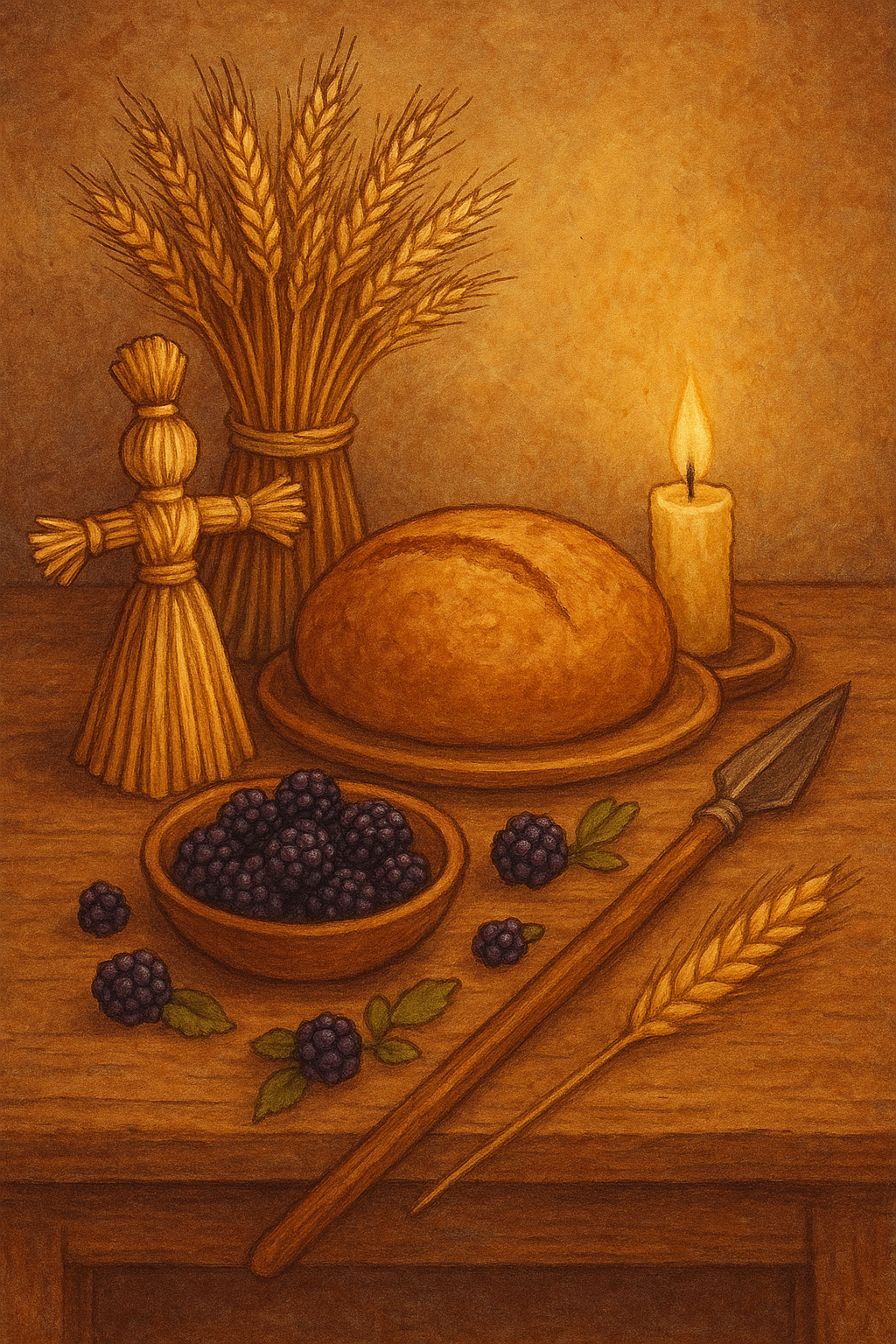
Fast forward to 2025, and we find ourselves with a rich heritage to draw from as we reimagine what Lughnasadh looks like for a modern Pagan audience. There are countless resources online, but here are a few simple ways to celebrate:

  • Bake fresh bread from scratch and serve it with a hearty dinner.
  • Craft a wheat straw or corn husk doll for your home altar.
  • Invite your friends over for a night of board games.
  • If you can’t find bilberries where you live, try making a blackberry cobbler.
  • Spend time reflecting on what you would like to “harvest” in this season of your life.
  • Since it’s the grain harvest, beer or ale makes a fitting celebratory drink.

Lughnasadh reminds us that every harvest is both a communal and a personal act. The ancient games and rituals may look different from the ways we celebrate today, but the heart of the festival remains the same: gathering together, honoring the fruits of our labor, and giving thanks for the abundance that sustains us.

Whether you celebrate with food, craft, games, or quiet reflection, Lughnasadh invites us all to pause and notice the gifts in our lives. May this season inspire you to share generously, live gratefully, and step into the next turn of the year with joy and intention.

Blessings, David Taliesin, http://www.sabbatandsabbaths.com

Posted in Lughnasadh | Tagged | Leave a comment

Is Lughnasadh Really About Lugh?

Today I was listening to a podcast by Jon O’Sullivan from the Irish Pagan School entitled “Is Lughnasadh really about Lugh?” I had always heard that the day was meant to honor the sun god Lugh. However, O’Sullivan set the record straight.

It’s true that Lughnasa is the Irish word for August, and it also a refers to the Lughnasa games or the harvest period in Ireland’s ancient cycle of festivals. But according to O’Sullivan, the Lughnasa games were created by Lugh to honor the death of his foster mother, Tailtiu.

In one of the old Irish tales, Tailtiu takes Lugh into foster care. She herself was not of the Tuatha Dé Danann, like Lugh, but a Fir Bolg, married to the Fir Bolg chieftain Bregon.

Morgan Dailmer echoes O’Sullivan’s perspective in Pagan Portals: Gods and Goddesses of Ireland: “In Old Irish the word Lughnasadh means ‘funeral assembly of Lugh,’ named not for Lugh himself but but for his memorializing of Tailtiu. Later the word shifted to Lughnasa, and the meaning changed as well to ‘games or assembly of Lugh.'”

Similarly, Llewellyn’s Sabbat Essentials: Lughnasadh explains that the holiday is referred to as “Lugh’s funeral games held in honor of his stepmother Tailtiu. Tailtiu was the wife of the last king of the Fir Bolg. When the Fir Bolg were overthrown, Tailtiu remarried to one of the new ruling class, the Tuatha de Danann. According to legend Tailtiu died of exhaustion after cleaning the fields of Ireland for agriculture, and Lugh initiated the Fair of Tailtiu in her honor as a wake fair including feasting, games, and sports.”

So, I stand corrected. I went back and revised some of what I had previously written about Lughnasadh. I deeply appreciate the scholarship from the Irish Pagan School and highly recommend checking them out if you’re interested in accurate insights into Irish mythology and Irish Pagan spiritual practice.

Blessed Be, David Taliesin, http://www.sabbatsandsabbaths.com

Posted in Lughnasadh | Tagged , , | 1 Comment

Protection Ritual

This is the closing ritual we did at last night’s Circle.

ANOINTING FOR PROTECTION [David Taliesin]
7-9 drops of Hyssop Essential Oil
1/4 cup olive oi

May the Divine Presence protect you
and keep you safe from all harm.

CASTING THE CIRCLE—Protection Prayer

The Light of the Divine surrounds us
The Love of the Divine enfolds us
The Power of the Divine protects us
The Presence of the Divine watches over us
Wherever we are, the Divine is. All is well.

CALLING THE QUARTERS [David Taliesin]

Guardians and Ancestors of the East, Spirits of Air, we ask you to be with us in our circle today. Protect our spirits from negative thoughts which rob us of our power, and hostile words that leave us feeling weak and defenseless. Hail and welcome!

Guardians and Ancestors of the South, Spirits of Fire, we ask you to be with us in our circle today. Protect our minds from conflicting voices that make it difficult for us to discern the way forward, and bad advice that is disguised as truth. Hail and welcome!

Guardians and Ancestors of the West, Spirits of Water, we ask you to be with us in our circle today. Protect our emotions from misdirected anger that can harm the wrong person, and media hype that leaves us in a continual state of panic. Hail and welcome!

Guardians and Ancestors of the North, Spirits of Earth, we ask you to be with us in our circle today. Protect our bodies from people who seek to do us physical harm, and disease that robs us of health and vitality. Hail and welcome!

Divine Presence who is known to us by many names, we ask for your protective energies to be with us in our circle today. We seek to serve you, to make this world a better place, and to be agents of change in a troubled world. Shield us from everything that prevents us from doing this sacred work. Hail and welcome!

PROTECTION MANDALA (Handout for everyone)

The protection mandala you have in front of you is governed by the element of air. Notice the hatched cross barrier. It is like an army of crossed swords and the heart center is well guarded by a unified group of individuals, symbolizing both warrior and nurturer traits.

This mandala carries the spirit of the bear. She brings her protective nature; she stands her ground; makes her presence known. She reminds us to also know instinctively when to retreat and how to best prepare for any periods of waiting.

As you spend time with this mandala, take the time to color it if you like. Allow it to speak to you. Your spirit may be asking you to be selective with your power. You must always trust your instincts, listen to whether your heart is telling you to stand up for yourself and your beliefs, or when to stay away from conflict, for it will not benefit you in any way to always be on the defensive. Protect your heart, but also know when to fight for it.

Click HERE for copy of the mandala

ENERGY RAISING TO EMPOWER THE MANDALA

CLOSING THE CIRCLE [David Taliesin]

Guardians and Spirits of the North, we thank you for your protective energy and caring presence in our circle today. Stay if you will, go if you must. We bid you farewell.

Guardians and Spirits of the West, we thank you for your protective energy and caring presence in our circle today. Stay if you will, go if you must. We bid you farewell.

Guardians and Spirits of the South, we thank you for your protective energy and caring presence in our circle today. Stay if you will, go if you must. We bid you farewell.

Guardians and Spirits of the East, we thank you for your protective energy and caring presence in our circle today. Stay if you will, go if you must. We bid you farewell.

Divine Presence, whose energy fills and directs everything, we thank you for your protective energy and caring presence in our circle today. As we leave this place give us the wisdom to know when to fight and when to retreat; when to speak up and when to remain silent. We bid you farewell.

The circle is open but never unbroken
Because it is a circle woven in love.
Whatever energy is left in this space
We return to the earth with a spirit of gratitude.
Merry meet, merry part, and merry meet again.

Copyright ©2025 by David Taliesin, http://www.sabbatsandsabbaths.com

Posted in Magic, Spirituality | Tagged , , | Leave a comment

Airmed, Irish Goddess of Herbalism: The Deep Dive

Over the past two weeks, I’ve done a deep dive into Airmed, the Irish Goddess of Healing Herbs. I turned to academic sources, which definitely offered more information and analysis than I found online. Here’s a summary of what I discovered.

Story Source—The only source in Irish mythology where Airmed is mentioned is in two stories from Cath Maige Tuired (i.e. The Second Battle of Moytura). There are three English translations readily available:

  • Whitley Stokes (1891)
  • Elizabeth A. Gray (1982)
  • Morgan Daimler (2020) — available on Amazon at a very reasonable price. Daimler’s version is, in my opinion, the best. She includes some of the original poetry omitted by the other translators and provides helpful footnotes.

If you place all three translations side by side, the basic elements of the first story are as follows:

  • King Nuada loses his arm in battle.
  • Dían Cécht, one of the Tuatha Dé Danann and a master physician, treats Nuada by crafting a silver mechanical arm for him. (Other sources for this part of the story say he was assisted by the metalworker Credne.)
  • Dían’s son Míach, also a healer, thought this treatment is “not good.” He healed it in “three sets of three days” for a total of nine days.
  • When Dían sees what Míach has done, he calls it a “bad healing,” though no reason is given for his reaction.
  • Dían then kills Míach by striking him four times in the head with a sword. Míach is able to heal the first three blows but the fourth is fatal. No motive for the murder is offered. (Some versions of this part of the story omit the murder entirely.)
  • Dían buries Míach, and 365 healing herbs grow from his grave which correspond to the number of joints and sinews in his body.
  • Finally, Airmed enters the story. She “separates” or “uproots” the herbs and arranges them on her cloak according to their properties.
  • Dían, discovering her work, “scatters” or “mixes” the herbs so that no one will possess complete knowledge of their healing properties—except Airmed. (The story mentions the Holy Spirit as the one who imparts this knowledge, but I think this is likely a later Christian addition and not a part of the original myth.)

The second story is as follows:

  • Dían, Míach (who is inexplicably alive again), Airmed, and another sibling, Ochtriuil, compose incantations over a healing well named Sláine into which Dían has placed all the healing herbs in Ireland.
  • Every solider who enters the well is healed from his wounds.

Scholarly Critique—Mark Williams in his book Ireland’s Immortals: A History of the Gods of Irish Myth, offers some insightful commentary regarding the authenticity of this story. You can read his full critique in the book, but here are some highlights from it:


He notes that this episode in the Cath Maige Tuired is “difficult to interpret” and “there is strong evidence that it is a late creation.”
He suggests saga-authors “could make bold artistic choices and shifts of emphasis when handling the native gods.” This makes perfect sense to me because everyone would have their own spin on the same story, especially as it was passed on orally.

He also points out that “there are a number of other medieval accounts of the healing of Nuadu, but not one of them mentions the killing of Míach.”


He argues that the murder does not make sense since outside sources also testify to Dían’s role as “the exemplar of the profession of medicine.”


There is also the unexplained resurrection of Míach in the story.


Finally, he observes that the names Míach (bushel) and Airmed (dry measure) are both terms used by apothecaries, suggesting the story may be best interpreted symbolically or metaphorically.

Dáithí Ó hÓgáin, in his book The Lore of Ireland, includes an interesting observation that helps us to better understand the story: “This is based in an ancient idea that the spirit of a person resides in a tree or plant that grows from his grave, and also on the common folk belief that there is a herb appropriate for each and every illness.”

Also in the blog The Ever-Living Ones (https://theeverlivingones.blogspot.com), it says that the well mentioned in the second story is “now Christianized and known Lady’s Well, which can be found in the grounds of Slane Castle Co. Meath. The waters from the well flow into the nearby River Boyne.”

My Conclusions—Williams makes some compelling points that really resonate with me. Ultimately, I view Airmed as an inspiring figure—her story speaks to our ability to rise above grief and tragedy and become sources of healing, both for ourselves and for others.

Since I understand all Divine energy as the same essence, revealed to us in different names and forms, I believe we can invoke Airmed in our healing practices and magical work. She is an Irish goddess through whom we can access Divine power. We can also continue to tell her story in our own way—as long as we acknowledge the original sources. (Many modern tellings include the beautiful detail of Airmed weeping over Míach’s grave, which I personally love.)

I’m 100% certain I’m not finished with Airmed. She is a Goddess whose name I’ll be invoking often as I work with herbs on my spiritual path. I will likely develop prayers and rituals for others to use when working with her. When I do, I will share them here.

Copyright ©2025 by David Taliesin, http://www.sabbatsandsabbaths.com
Posted in Goddess, Herbology | Tagged , , , , , , | Leave a comment

Lughnasadh/Lammas: August 1st

lughnasadh

August has a rhythm all it’s own, especially in the South. These hot, humid days force us to slow down our pace a bit, and why not? The soil has been tilled. Gardens have been planted. Many vegetables have already been harvested and more are on the way. The only thing left to do is pray for rain and wait until everything is ripe and ready. In the meantime, we can escape the sweltering heat of the day by “sitting a spell” on the porch with friends, sipping glasses of sweet tea and eating a freshly baked peach cobbler! That’s how we roll in North Carolina and I wouldn’t have it any other way!

The first of August is known by several names: 1) Lughnasadh, which is Gaelic for the modern Irish word “Lunasa,” meaning August. It gets its name from the Irish God Lugh of the Tuatha de Danann who created the Lughnasa games to honor his step-mother Tailtiu. It included a ceremony to celebrate the first fruits of the grain harvest. 2) Lammas is the English harvest festival which occurs on the same day. The word is Anglo-Saxon for “loaf mass” and was celebrated by Pagans and Christians alike. 3) Festival of Green Corn, which is the name Native Americans attach to this harvest festival, and 4) Feast of St. Peter in Chains, which is an odd ancient Christian observance that has been removed from the liturgical calendar.

Basically, Lammas is the first of three harvest Sabbats or festivals.  This particular one celebrates the first fruits of corn, wheat and barley. Needless to say, this is something to be thankful for, especially in ancient times. A successful harvest meant there would be plenty of grain to last through the cold winter months. The main food for this festival is bread in one form or another. Bread has always been universally symbolic of life, Mother Earth, home, hearth, harvest and vitality. Because of this, ritual bread appears in every religious tradition I can think of.

For early Christians “Loaf Mass” was an adaptation of the Pagan Lammas. In both traditions, bread was baked and presented as an offering to the Divine in thanksgiving for a successful harvest. Here is an ancient Christian prayer that was used on Loaf Mass:

Holy Lord, almighty Father, eternal God, graciously deign,
to bless this bread with Thy spiritual benediction
that all who eat it may have health of body and soul
and that they may be protected against all sickness
and against all the snares of the enemy.  Amen.

Some of the bread in the Christian tradition was used to celebrate the Eucharist (Holy Communion) on Lammas. The rest of it was blessed and taken home for the Lammas Day feast. I also discovered that in Anglo-Saxon England this blessed bread was used by some to work magic! According to a book of Anglo-Saxon charms, a Lammas loaf was broken into four bits, which were placed in the four corners of the barn in order to protect the gathered grain.

In modern times, we can celebrate Lughnasadh/Lammas not only by giving thanks to the Divine for a successful harvest, it can also be a day to support local farmers. Let’s face it, they work their tails off to grow the food that appears on our tables. Perhaps we can use this holy day to commit ourselves to buying as much locally grown food as possible. I make a weekly trip to a tailgate market that is less than a mile from my house. It’s a wonderful opportunity for us urban dwellers to connect with our agrarian brothers and sisters. I always have wonderful conversations with the vendors there and I’ve learned a lot about how to cook the fruits and vegetables that are grown by them.

As a final note, my Cherokee brothers and sisters still celebrate the Festival of Green Corn. There is always dancing, singing, drumming and the eating of corn in a number of forms. You can Google the topic for more information.

So I wish everyone a most blessed Lughnasadh/Lammas celebration. If you’re ever in North Carolina I have a glass of sweet tea and a peach cobbler waiting for you!

Copyright ©2025 by David Taliesin, http://www.sabbatsandsabbaths.com
Posted in Lughnasadh, Wheel of the Year | Tagged , , | 1 Comment